
Antifreeze 101

instincts
Navigating the Cold with Star brite Solutions
As boating enthusiasts and outdoor adventurers, preparing for the colder months is essential to protect your equipment and investments. A key part of this preparation involves understanding and choosing the right antifreeze products. At Star brite, we often encounter questions about the difference between freeze points and burst points on antifreeze labels, especially when customers find their antifreeze frozen solid in low temperatures.
What is Freeze Point in Antifreeze?
The freeze point of an antifreeze refers to the temperature at which the liquid starts to solidify or crystallize. This is crucial to understand because, contrary to common belief, a frozen antifreeze can still offer protection. The consistency of the antifreeze at this point may resemble slush rather than a solid block of ice. This slush-like state still allows for some movement within the system, reducing the risk of damage to pipes or engines.
Understanding Burst Point
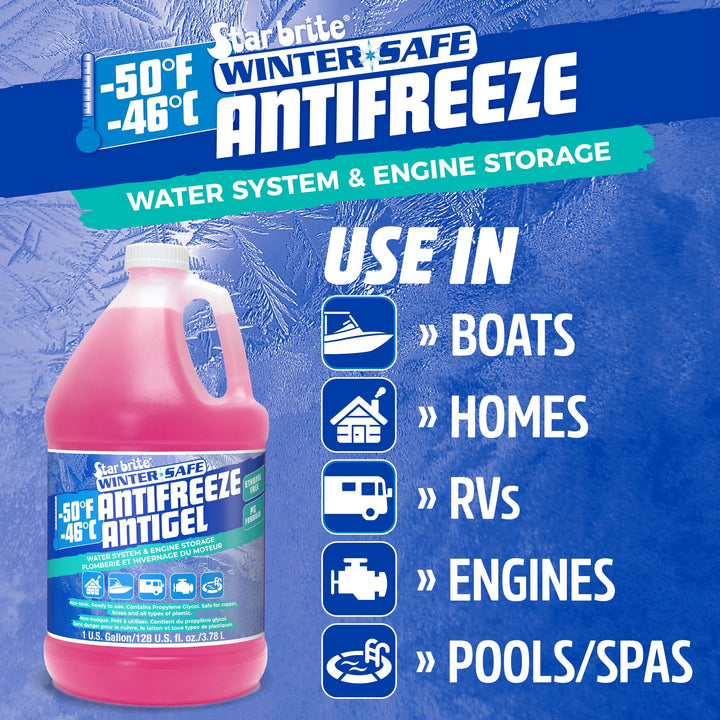
The burst point is often the more critical factor for many users. This is the temperature at which the expansion of the frozen liquid could cause a container or pipe to burst. The burst point is typically much lower than the freeze point. For example, a product labeled with a burst protection of -50°F may start to freeze at a higher temperature, but it won't expand enough to damage a copper pipe until it reaches -50°F.

Why Does Antifreeze Freeze?
It might seem counterintuitive that antifreeze can freeze. The key is in the level of protection it provides even in a frozen state. Antifreeze is designed to expand less than water when it freezes, reducing the risk of bursting pipes or damaging systems.
Tips for Using Antifreeze
Understand your needs
Assess the typical environmental conditions your equipment will face and choose an antifreeze that matches those conditions.
Regular Checks
Regularly check the antifreeze levels and condition, especially before the onset of winter.
Proper Application
Ensure that antifreeze is applied according to manufacturer instructions for maximum effectiveness.
Environmental Consideration
Choose antifreeze options that are environmentally friendly and dispose of used antifreeze responsibly.
Understanding freeze points and burst points in antifreeze is crucial for effective winterization.
At Star brite, we offer a range of antifreeze products tailored to different needs and temperatures. Whether you need a solution that stays more fluid at lower temperatures or one that offers robust burst protection, we have the right formula for you. Remember, the key is to select the product that aligns with your specific requirements and environmental conditions. By doing so, you ensure the longevity and safety of your equipment throughout the colder months.