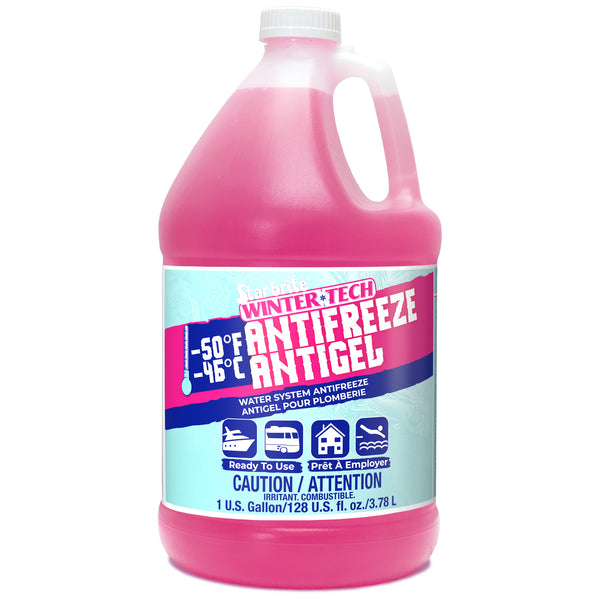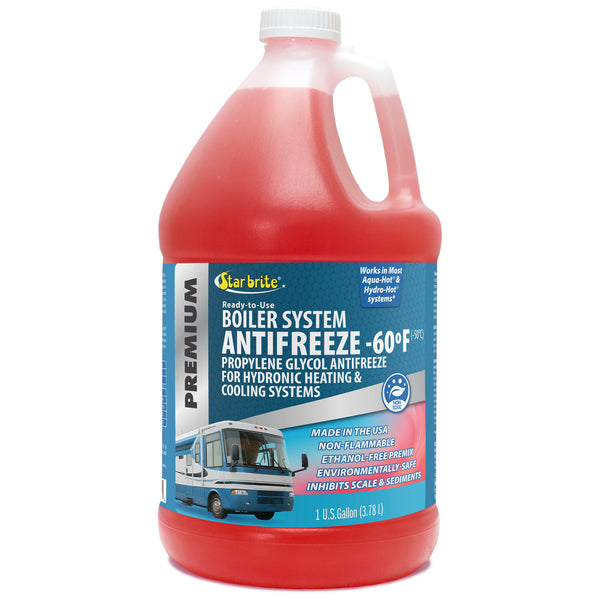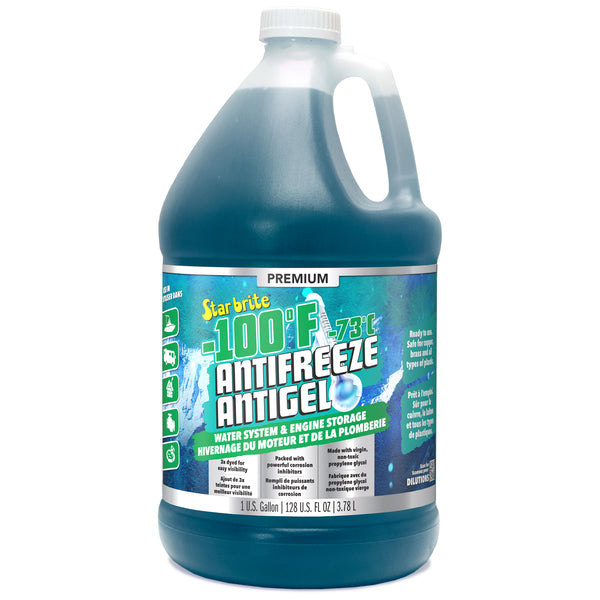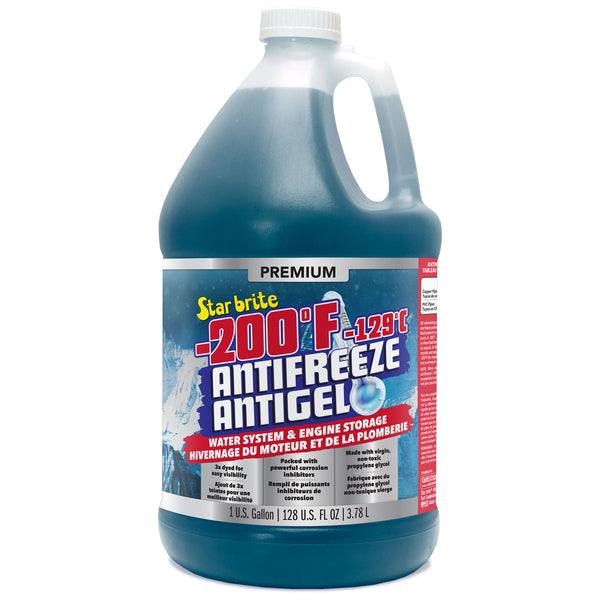
Premium -50°F Antifreeze


Protects water systems, RVs, boats, and marine engines from freezing and bursting down to -50°F. Designed for copper, brass, and plastic pipes in potable water and engine winterization applications.
DESIGNED FOR:
Copper, Brass, Plastic, Water Systems
WORKS AGAINST:
Freezing Damage, Corrosion
FeaturesProduct InfoDirections
- PROTECTS TO -50°F Prevents freezing and bursting in water systems during cold winter conditions, ensuring your pipes stay intact
- FORMULATED FOR POTABLE WATER SYSTEMS Contains propylene glycol and corrosion inhibitors designed for use in potable water systems
- DESIGNED FOR USE ON MULTIPLE MATERIALS Compatible with copper, brass, and plastic plumbing materials
- READY TO USE FORMULA No dilution needed; pour directly into systems for immediate winterization protection
- VERSATILE APPLICATIONS Suitable for RVs, boats, campers, home plumbing, and other water systems requiring seasonal maintenance
- ENGINE STORAGE SOLUTION Ideal for protecting marine engines and water systems from freeze damage during winter months
- CONTAINS CORROSION INHIBITORS Helps prevent rust, corrosion, and buildup, prolonging the lifespan of pipes and plumbing systems
- EASY APPLICATION PROCESS Simple step-by-step instructions make it quick and easy to winterize water systems
- TRUSTED QUALITY A reliable winterizing solution trusted by RV and marine enthusiasts for superior protection and performance
Product details
- UPC
- 71247314007
- Weight
- 9.14 lb
Safety Data Sheet
READ AND FOLLOW CAREFULLY
FOR WATER SYSTEM WINTER LAY UP:
1. Drain water tank and as much water as possible. Open the hot and cold water faucets as well as all other outlets. Blow out as much water as possible with air pressure.
2. Drain water heater tank, bypass water heater after draining. By-pass hot water tank by disconnecting the inlet and outlet lines and connect them together.
FOR WATER SYSTEM WINTER LAY UP:
1. Drain water tank and as much water as possible. Open the hot and cold water faucets as well as all other outlets. Blow out as much water as possible with air pressure.
2. Drain water heater tank, bypass water heater after draining. By-pass hot water tank by disconnecting the inlet and outlet lines and connect them together.